


FOR AUTHORS
Search
Search Results
##search.searchResults.foundPlural##
-

Maculopapular sarcoidosis: the importance of skin signs
1081PDF: 406HTML: 45 -
38 | A GIFT FROM ECUADOR: IMPORTED CUTANEOUS MYIASIS CAUSED BY DERMATOBIA HOMINIS D. Tesauri1, F. Di Cioccio1, T. Galeotti1, L. Bianchi1, K. Hansel1, L. Stingeni1, F. Veronesi2, I. Moretta2 | 1Dermatology Section, Department of Medicine and Surgery, University of Perugia, Italy; 2Department of Veterinary Medicine, University of Perugia, Italy
144PDF: 36 -
35 | DIAGNOSTIC PITFALLS IN CUTANEOUS ULCERS: ARE THEY JUST ULCERS? V. Schirripa1, A. Schirripa2 | 1Private Practice Dermatologist, Former Director of the Dermatology Unit, Hospital of Locri, (RC), Italy; 2Specialist in Hygiene and Preventive Medicine, Italy
98PDF: 31 -

Unilateral Blaschkoid lichen planus in successive pregnancies
1617PDF: 734HTML: 4713 -

A giant benign clear cell hidradenoma on the anterior trunk
1520PDF: 942HTML: 1043 -
20 | WHERE THE SUN DOESN'T SHINE, UV FLUORESCENCE DOES: DIAGNOSTIC AND THERAPEUTIC INSIGHTS OF UV-INDUCED FLUORESCENCE DERMOSCOPY IN SCROTAL POROKERATOSIS Z. Fratton1|2, M. Milani3, D. Strippoli4, A. Ponziani4, F. Fantini4, M. Andreassi4 | 1Department of Medicine, Institute of Dermatology, University of Udine, Italy; 2Dermatology Unit, Ospedale San Bortolo, Vicenza, Italy; 3Department of Pathology, ASST Lecco, Alessandro Manzoni Hospital, Lecco, Italy; 4Dermatology Unit, ASST Lecco, Alessandro Manzoni Hospital, Lecco, Italy
101PDF: 30 -
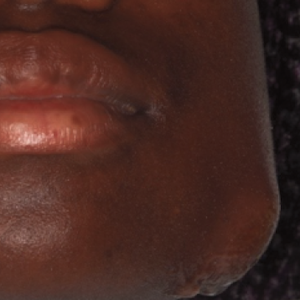
Transient cutaneous hypomelanosis after cryoanesthesia
1023PDF: 462HTML: 34 -
40 | BEYOND THE USUAL CAT: TRICHOPHYTON BENHAMIAE KERION CELSI IN A CHILD WITH CHINCHILLA-ASSOCIATED HOUSEHOLD OUTBREAK T. Galeotti1, D. Tesauri1, P. Caposciutti1, L. Bianchi1, S. Crotti2, D. Cruciani2, K. Hansel1, L. Stingeni1 | 1Dermatology Unit, Department of Medicine and Surgery, University of Perugia, Perugia, Italy; 2Istituto Zooprofilattico Sperimentale dell'Umbria e delle Marche "Togo Rosati", Perugia, Italy
112PDF: 125 -

21 | Melanoma in situ: long-term outcomes and follow-up strategies based on risk stratification Beatrice De Checchi1, Paolo del Fiore2, Irene Russo2, Chiara Trevisiol2, Marco Domenico Mazza2, Saveria Tropea2, Francesco Russano2, Mauro Alaibac3, Carlomaria Gianesini4, Giovanni Madeo4, Simone Mocellin2|4 | 1Department of Medicine, University of Padua, Padua; 2Soft-Tissue, Peritoneum and Melanoma Surgical Oncology Unit, Veneto Institute of Oncology IOV-IRCCS, Padua; 3Department of Dermatology, University of Padua; 4Department of Surgery, Oncology and Gastroenterology, University of Padua, Padua, Italy.
473
