

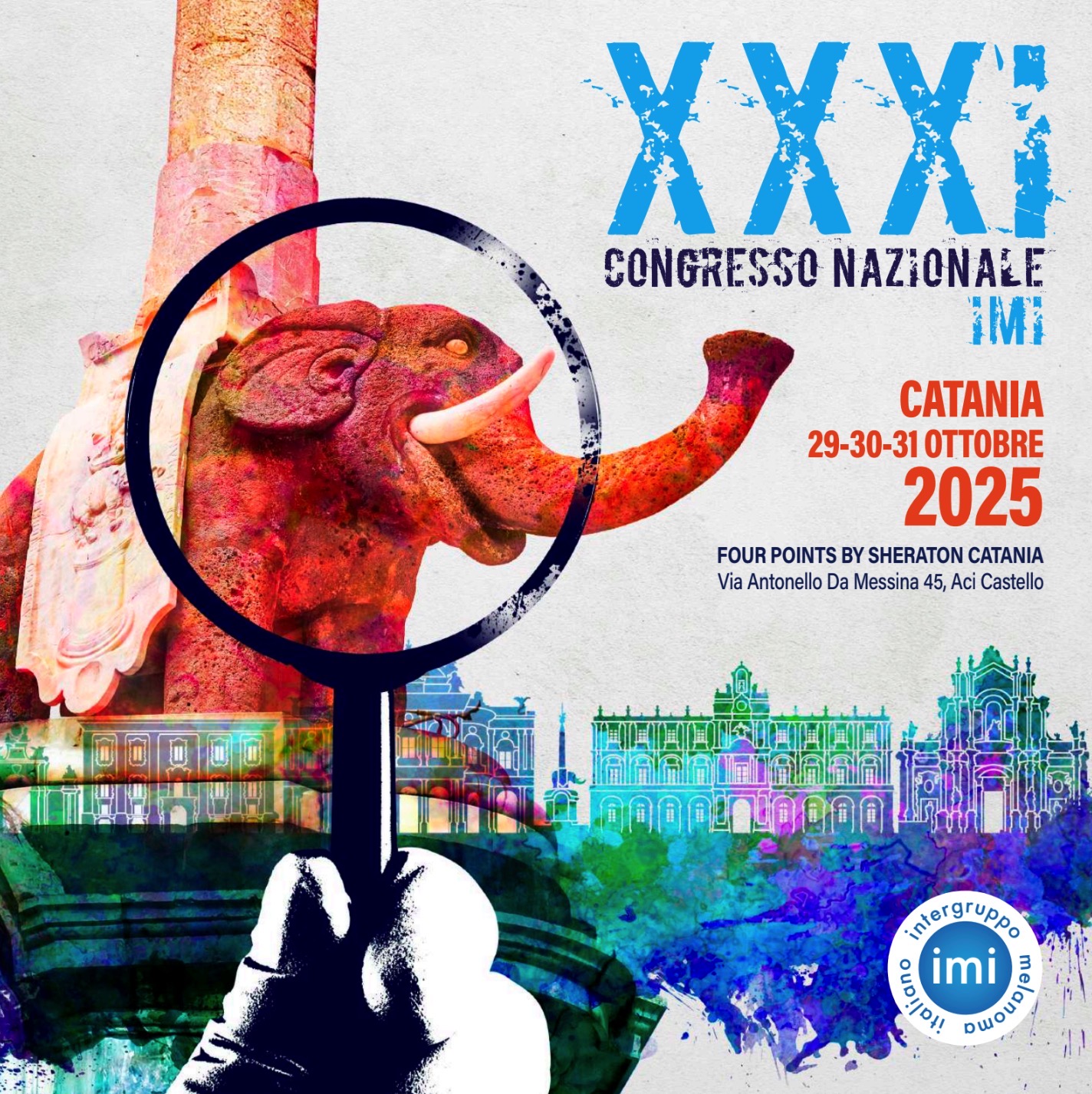
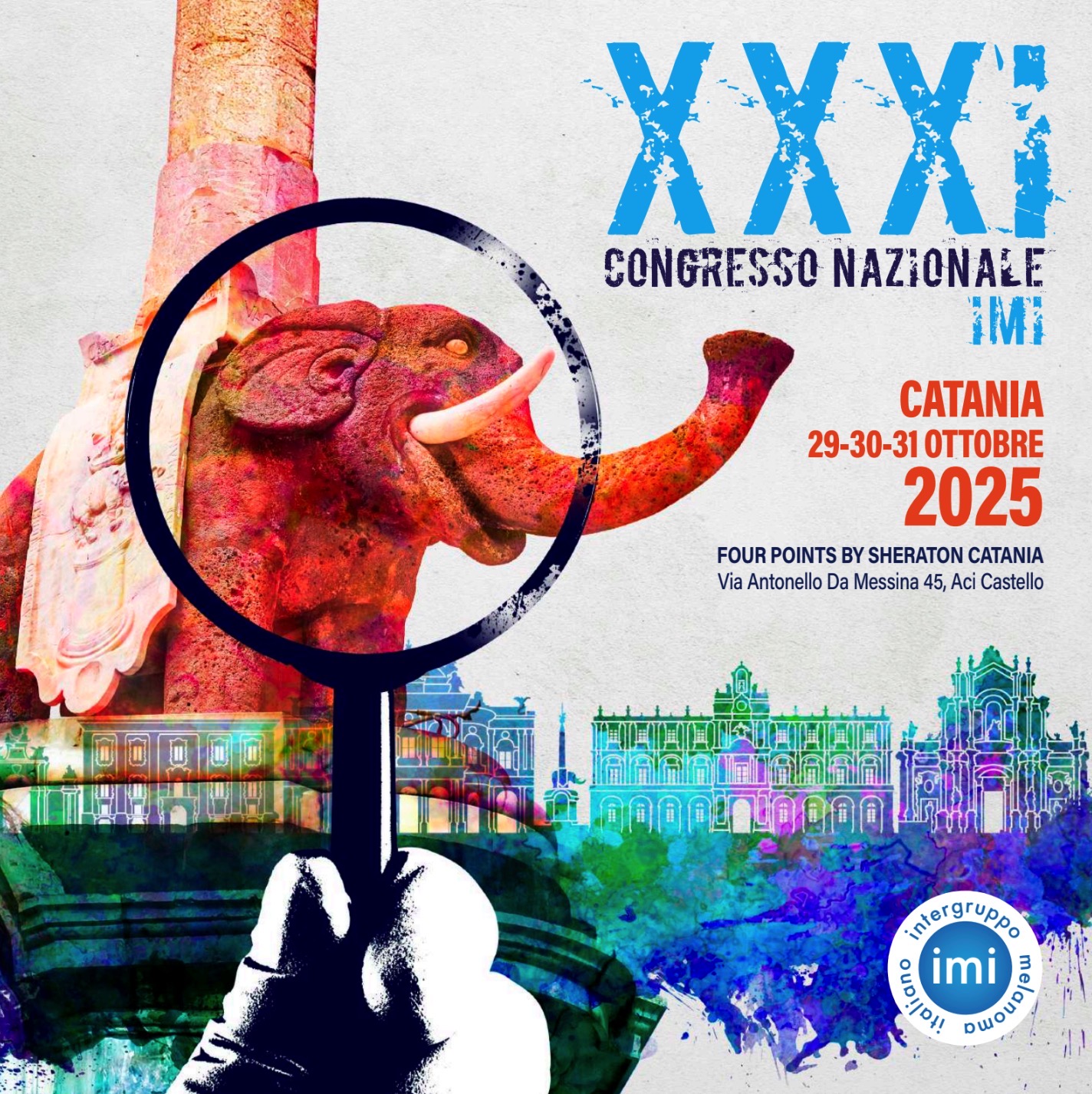
XXXI Congresso Nazionale Intergruppo Melanoma Italiano (IMI)
2025: XXXI Congresso Nazionale Intergruppo Melanoma Italiano (IMI)

12 | Integrated molecular and immunophenotypic profiling of uveal melanoma: prognostic insights and biological perspectives
Francesco Fortarezza1, Giovanni Zarrilli2, Giada Munari1, Valentina Angerilli3, Mariangela Balistreri1, Luisa Piccin4, Valentina Salizzato4, Jacopo Pigozzo4, Giulia Midena5, Raffaele Parrozzani6, Valentina Guarneri4|7, Edoardo Midena5|6, Marta Sbaraglia1|8, Matteo Fassan8|9, Angelo Paolo Dei Tos1|8 | 1Surgical Pathology and Cytopathology Unit, Department of Integrated Diagnostics. Azienda Ospedale-Università Padova, Padua; 2Surgical Pathology Unit, Azienda Ulss 3 Serenissima, Ospedale dell'Angelo, Venezia; 3Department of Surgical Pathology, Azienda ULSS2 Marca Trevigiana, Treviso; 4Medical Oncology 2, Veneto Institute of Oncology, IOV-IRCCS, Padua; 5IRCCS-Fondazione Bietti, Rome; 6Department of Ophthalmology, University of Padova, Padova; 7Department of Surgery, Oncology and Gastroenterology, University of Padua, Padua; 8Department of Medicine, University of Padua School of Medicine, Padua; 9Veneto Institute of Oncology, IOV-IRCCS, Padua, Italy.
Publisher's note
All claims expressed in this article are solely those of the authors and do not necessarily represent those of their affiliated organizations, or those of the publisher, the editors and the reviewers. Any product that may be evaluated in this article or claim that may be made by its manufacturer is not guaranteed or endorsed by the publisher.
All claims expressed in this article are solely those of the authors and do not necessarily represent those of their affiliated organizations, or those of the publisher, the editors and the reviewers. Any product that may be evaluated in this article or claim that may be made by its manufacturer is not guaranteed or endorsed by the publisher.
Published: 11 December 2025
408
Views
0
Downloads
Authors
Methods: We retrospectively analysed 84 UM cases using an integrated approach combining histological classification, immunohistochemical profiling (including BAP1, p53, CD3, CD8, PD-L1, and mismatch repair proteins), and targeted next-generation sequencing with a 63-gene panel. Tissue microarrays were used for immunophenotyping, and mutation data were stratified by prognostic outcomes.
Results: Most tumours were localized to the choroid and predominantly exhibited spindle-cell morphology. Mutations in GNAQ or GNA11 were identified in 83% of sequenced cases. Loss of BAP1 expression correlated with epithelioid histology and denser T-cell infiltration, whereas tumours consistently lacked PD-L1 expression. Aberrant p53 staining was more frequent in spindle-cell tumours, though TP53 mutations were rare, suggesting functional inactivation through other mechanisms. Notably, mutations typically associated with cutaneous melanomas (e.g., BRAF, KIT, CDKN2A) were also detected, particularly in iris melanoma, suggesting site-specific molecular convergence. Additional recurrent alterations were found in NOTCH1, PTEN, PIK3CA, and KDR, implicating the mTOR and VEGF signalling pathways. A high mutational burden (p<0.001), along with mutations in genes such as H3F3A (p<0.001), IDH2 (p=0.01), and JAK3 (p=0.05), were more frequent in tumors with poorer prognosis, supporting their potential role in disease aggressiveness.
Conclusions: This study highlights the heterogeneous molecular landscape of UM and underscores the importance of integrating histopathological and molecular data for improved prognostic stratification. The identification of potential therapeutic targets and atypical mutations suggests avenues for future research and tailored therapeutic strategies. Prospective studies with extended molecular panels and clinical outcomes are warranted to validate and expand upon these findings.
Downloads
Download data is not yet available.
Citations



How to Cite
1.
12 | Integrated molecular and immunophenotypic profiling of uveal melanoma: prognostic insights and biological perspectives: Francesco Fortarezza1, Giovanni Zarrilli2, Giada Munari1, Valentina Angerilli3, Mariangela Balistreri1, Luisa Piccin4, Valentina Salizzato4, Jacopo Pigozzo4, Giulia Midena5, Raffaele Parrozzani6, Valentina Guarneri4|7, Edoardo Midena5|6, Marta Sbaraglia1|8, Matteo Fassan8|9, Angelo Paolo Dei Tos1|8 | 1Surgical Pathology and Cytopathology Unit, Department of Integrated Diagnostics. Azienda Ospedale-Università Padova, Padua; 2Surgical Pathology Unit, Azienda Ulss 3 Serenissima, Ospedale dell’Angelo, Venezia; 3Department of Surgical Pathology, Azienda ULSS2 Marca Trevigiana, Treviso; 4Medical Oncology 2, Veneto Institute of Oncology, IOV-IRCCS, Padua; 5IRCCS-Fondazione Bietti, Rome; 6Department of Ophthalmology, University of Padova, Padova; 7Department of Surgery, Oncology and Gastroenterology, University of Padua, Padua; 8Department of Medicine, University of Padua School of Medicine, Padua; 9Veneto Institute of Oncology, IOV-IRCCS, Padua, Italy. Dermatol Reports [Internet]. 2025 Dec. 11 [cited 2026 Oct. 19];. Available from: https://journals.pagepress.net/dr/article/view/10754
Copyright (c) 2025 The Author(s)


This work is licensed under a Creative Commons Attribution-NonCommercial 4.0 International License.
